 |
Tumanyan love. Rejected loves
2021 marks the 150th anniversary of the birth of Olga Tumanyan, the wife of Hovhannes Tumanyan. Marrying 19-year-old Tumanyan at the age of 17, Olga, in fact, becomes Tumanyan's whole conscious life companion. But there were other women in Tumanyan's life. Was Olga Tumanyan's muse? Did such an early marriage affect the peculiarities of Tumanyan's work? And, in general, what would inspire a poet in life if not the woman and wine? Literary critics Hayk Hambardzumyan and Arkmenik Nikoghosyan are debating.
|
 |
Unculture Literature
Since the late 1990s, we can notice the gradual expulsion of images of village life from our literature. Why is that, what circumstances led to it? Literary critics Hayk Hambardzumyan and Arkmenik Nikoghosyan discuss the topic within the framework of "Parallel Readings".
|
 |
How to make a favorite of the classics?
Schoolchildren find it difficult to read classical literature, and their parents, even if they read in time, they could hardly re-read it today. This problem is not unique only to our reality. Literary critics Hayk Hambardzumyan and Arkmenik Nikoghosyan discuss the difficulties of reading the classics.
|
 |
Sobering literatureDon't we more often remember and quote the works of Armenian literature that feed our national pride? Few remember the originals, which tell cruel truths, are pessimistic, but sobering. Literary critics Hayk Hambardzumyan and Arkmenik Nikoghosyan debate within the framework of "Parallel Readings". @ShoghakatTVcompany
|
 |
St. Sargis: Intercessor of lovers and brave generalIf in recent years the image of St. Sargis is mostly perceived as an intercessor and assistant of lovers, then in literature he is also a brave general, an image that gives strength to the heroes of the epic. How is the worship of St. Sargis expressed in our oral and literary traditions, what does this hero have in common with our other saints and epic heroes? Literary critics Hayk Hambardzumyan and Arkmenik Nikoghosyan are debating. |
 |
Literature: order or independent?What is the relationship between public, state, publishing order and the independence of literature? Literary critics Hayk Hambardzumyan and Arkmenik Nikoghosyan are debating within the framework of the "Parallel Readings".
|
 |
Poet or poetess? Women's poetry
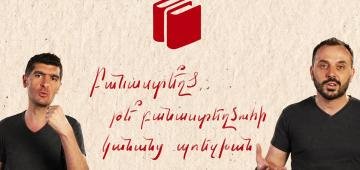
Should poetry created by men and women be differentiated? Are there any distinctive artistic features? How do women feel and present themselves in poetry? Literary critics Hayk Hambardzumyan and Arqmenik Nikoghosyan are debating on the topic.
|
 |
For the Sake of the Father and SonThe topic of father-son opposition and conflict is very common in the Armenian and world-wide literature. What are the psychological, mythological, literary peculiarities of this topic, what are the motives for its realization? Literary critics Hayk Hambardzumyan and Arkmenik Nikoghosyan are debating within the framework of the "Parallel Readings". |
 |
Literary New Year and ChristmasHow are New Year and Christmas reflected in Armenian and world-wide literature? Why are there so few "festive" works in Armenian literature? Is it a literary issue or a national feature? Literary critics Hayk Hambardzumyan and Arkmenik Nikoghosyan are debating within the framework of the "Parallel Readings".
|
 |
Searching for the WriterLiterature is more often perceived by a wide range of readers and interpreted in relation to the author's biography. Biography verifies the sincerity and justification of literature and on the contrary, biographical elements are sought and found in literature. How valud is this approach, what does the knowledge of the author's biography, the personal recognition of the author give to the knowledge of the writer's work? Literary critics Hayk Hambardzumyan and Arqmenik Nikoghosyan are debating in the "Parallel Readings" pavilion. |
 |
Who is literary criticism for?Whether the language and addressee of traditional literary criticism are subject to change? Literary critics Hayk Hambardzumyan and Arkmenik Nikoghosyan are debating within the frameworks of “Parallel Readings”.
|
 |
Daniel Varuzhan: Heathen Songs
Poetry collection of Daniel Varuzhan “Heathen Songs” raised huge wave of enthusiasm in 1913. Due to that, heathen literary movement got new start. However, the aesthetics program of Varuzhan was cut short: the Armenian Genocide took place in 1915 and all plans were disrupted.
The collection “Heathen Songs” remained unsurpassed with its new and unique aesthetics and one of a kind ever.
|