 |
In what edition to read the classics?
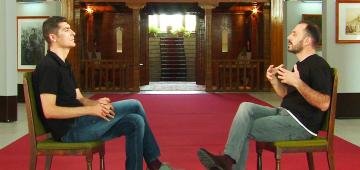
Is it so important to differentiate the type of book when choosing a book? Does it matter who published it? Types of publication are discussed by literary critics Hayk Hambardzumyan and Arkmenik Nikoghosyan.
|
 |
Life in one day
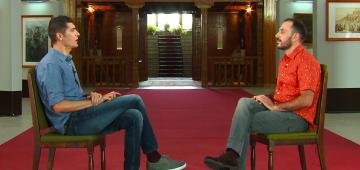
In novels, writers experiment with time, speeding up or slowing down, confusing the past, the present, and sometimes even the future. They can describe centuries in a few pages, or in a giant novel, a day. The novels unfolding during one day are read in parallel by literary critics Hayk Hambardzumyan and Arkmenik Nikoghosyan.
|
 |
Magical realism and its Armenian charm
When the phrase "magical realism" is heard, everyone immediately remembers Colombian Gabriel Garcia Marquez and his novels, especially "One Hundred Years of Solitude". Is Marquez the founder of magical realism? How to distinguish the work written in that direction from imitation? Is it possible to talk about Armenian magical realism? Literary critics Hayk Hambardzumyan and Arkmenik Nikoghosyan read Armenian and world literature on the topic in parallel.
|
 |
Khachatur Abovyan
Khachatur Abovyan, one of the brightest figures not only in Armenian literature, but also in Armenian history. An exceptional writer, an innovative and wonderful pedagogue, a person completely devoted to the homeland. Literary critics Hayk Hambardzumyan and Arkmenik Nikoghosyan read Khachatur Abovyan's behavior in parallel.
|
 |
From Where and How to Start Reading?
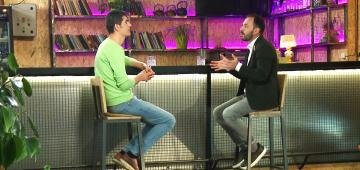
We often complain that we read less, and there is no reading culture. And do we teach reading? How to start reading? Literary critics Hayk Hambardzumyan and Arkmenik Nikoghosyan are debating.
|
 |
Prohibited Armenian literature
In the 19th century, Armenian literature was subject to the intervention of tsarist and Ottoman censors. Armenian writers of the Soviet period were also always accompanied by the direct and invisible presence of the censor. But there are also prohibited books. What books were prohibited in our country and why? Was it only due to "bureaucratic interference"? Literary critics Hayk Hambardzumyan and Arkmenik Nikoghosyan are debating.
|
 |
Jesus Christ in Armenian literature
The Gospel episodes of Christ's earthly life, His word, His crucifixion and resurrection have been widely read in Armenian and world literature and art. How do writers reflect on the image of the Savior, what sacraments do they find and present? Literary critics Hayk Hambardzumyan and Arkmenik Nikoghosyan are talking.
|
 |
Obstacles of reading Western-Armenian literature
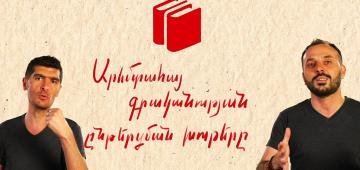
Reading Western-Armenian as well as Diasporan literature is not widely covered in Armenia. How to solve problems related to reading, dissemination, and new research? Literary critics Hayk Hambardzumyan and Arkmenik Nikoghosyan are debating.
|
 |
Poetry today
Lyric poetry and poetry have always been loved and readable. There is an impression that in recent years readers preferre prose works, especially novels. Literary critics Hayk Hambardzumyan and Arkmenik Nikoghosyan debate on the difficulties, necessity and significance of reading poetry.
|
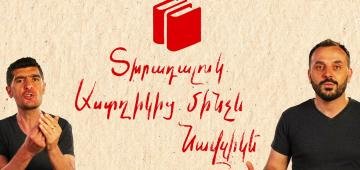 |
From Sad Astghik to NavzikeEvery woman who appeared in Charents' life was "marked" by poetic realizations. How did Charents' loves affect his creative process? Literary critics Hayk Hambardzumyan and Arkmenik Nikoghosyan are debating.
|
 |
Prominent women of Armenian proseIt is impossible to imagine world literature without the presence of women. Who are the prominent women of Armenian prose, what sets them apart and how are they lived? Literary critics Hayk Hambardzumyan and Arkmenik Nikoghosyan are debating.
|
 |
Open the doors, spring is coming
The theme of spring and related motifs are one of the most frequently used in Armenian and world poetry. Moreover, spring is not only the season of the year in poetry, but also a whole system of pictorial, symbolic, psychological generalizations. Literary critics Hayk Hambardzumyan and Arkmenik Nikoghosyan are debating on the peculiarities of realizing spring motifs in Armenian literature.
|